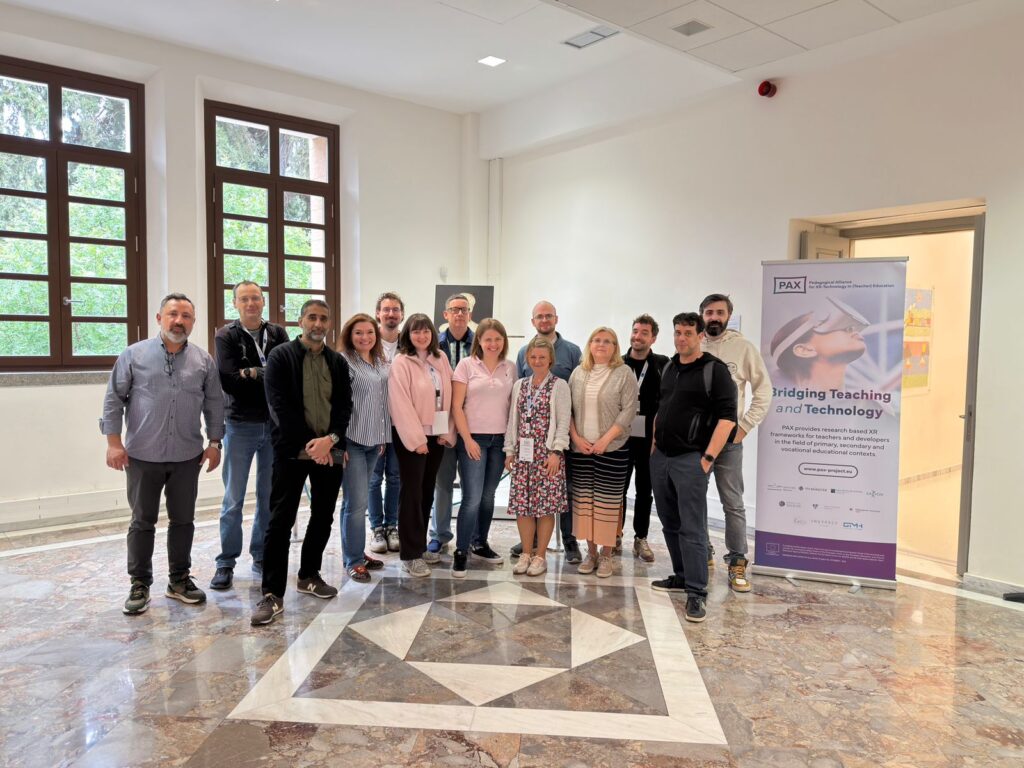
The University of the Aegean in Rhodes hosted the PAX Erasmus+ Project Meeting and Conference on 15–16 April 2026, bringing together the full international consortium alongside local educators, researchers, and students for two days of intensive collaboration, innovation, and hands-on exploration of Extended Reality (XR) technologies in education.
Day 1 — Project Meeting (15 April)
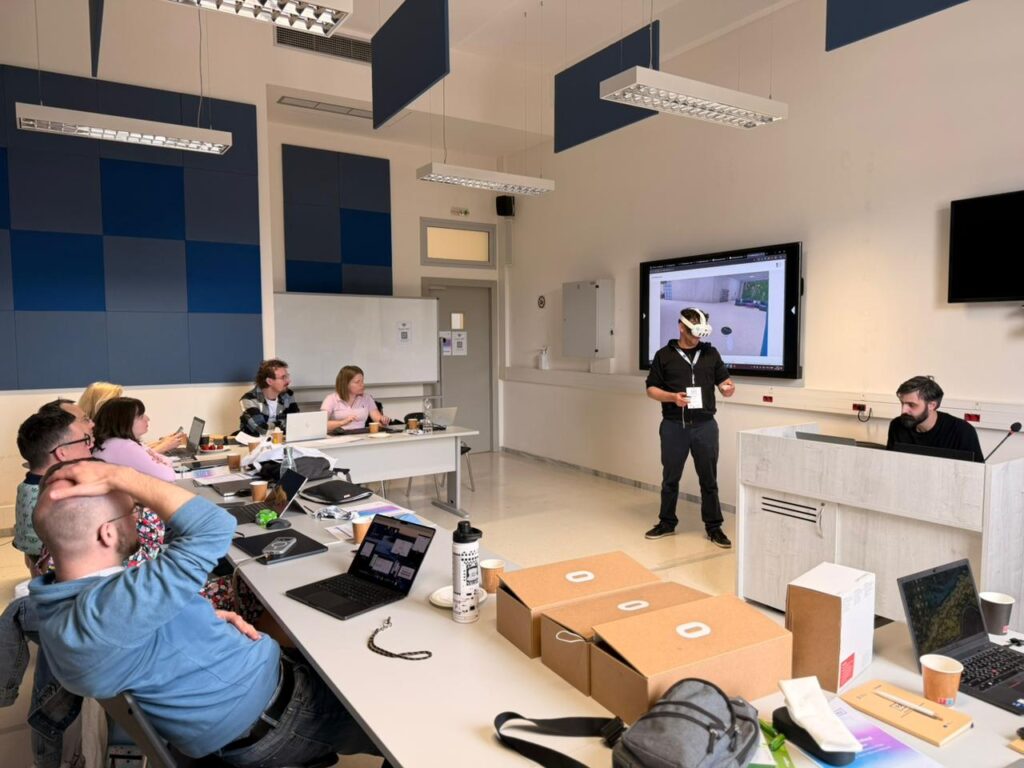
The first day was dedicated to the consortium’s internal project meeting, hosted at the Department of Pre-School Education and Educational Design. Partners reviewed progress across all work packages (WP1–WP7) and participated in hands-on workshops focused on the PAX Guideline for XR Developers (WP4) and the PAX Training Space (WP5). A highlight of the day was the live demonstration of the PAX Training Space on Meta Horizon, where partners navigated the immersive VR environment using Meta Quest headsets, exploring virtual training rooms designed for teacher education. The day also included planning sessions for the upcoming national pilot activities and discussions on dissemination and sustainability strategies. The working day concluded with a guided tour of the Palace of the Grand Master in the UNESCO-listed Medieval City of Rhodes.
Day 2 — PAX Conference (16 April)
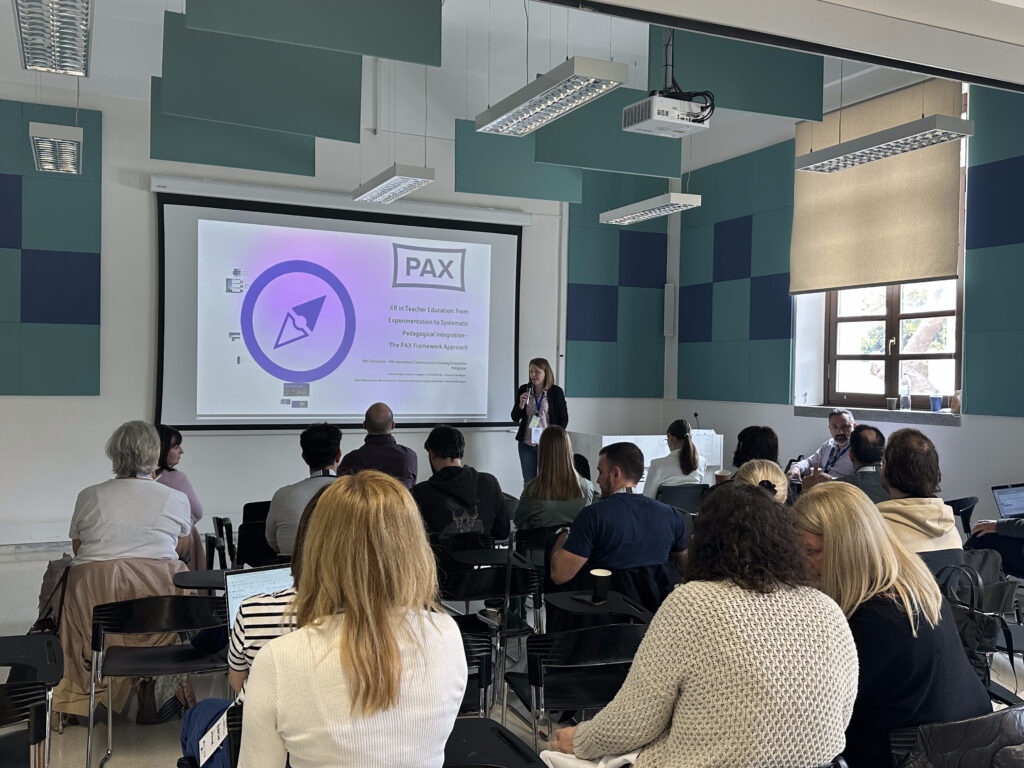
The second day opened with a keynote presentation on the PAX project’s vision: to enhance education by equipping teachers with XR skills and knowledge, support seamless integration of XR into curricula, and foster student-centred, problem-based approaches to teaching with immersive technologies. The conference programme featured presentations of the project’s key outputs — the PAX Open Access Reference Collection, the PAX Compass competence framework, the PAX Development Environment, and the PAX Training Space — followed by the PAX Framework Approach for systematic pedagogical integration of XR in teacher education.
Conference participants had the opportunity to experience XR technologies firsthand through hands-on workshops covering the full XR spectrum, from mobile Augmented Reality applications to fully immersive Virtual Reality. Showcase sessions featured innovative tools including medical VR simulations with patient assessment environments, AR-based science apps, and Gesture VR applications for subject didactics. Interactive discussion circles brought together consortium members, local educators, and students to exchange ideas on the challenges and opportunities of XR integration in primary, secondary, and vocational education.
The conference concluded with a call to action, emphasising that embracing XR technologies in education is not just an option but essential for fostering understanding and inspiring the next generation to take meaningful steps toward a sustainable future.
The PAX project (Pedagogical Alliance for XR-Technology in Teacher Education) is co-funded by the European Union under the Erasmus+ programme.